LA City Council Removes Anti-Camping Zones in Hollywood
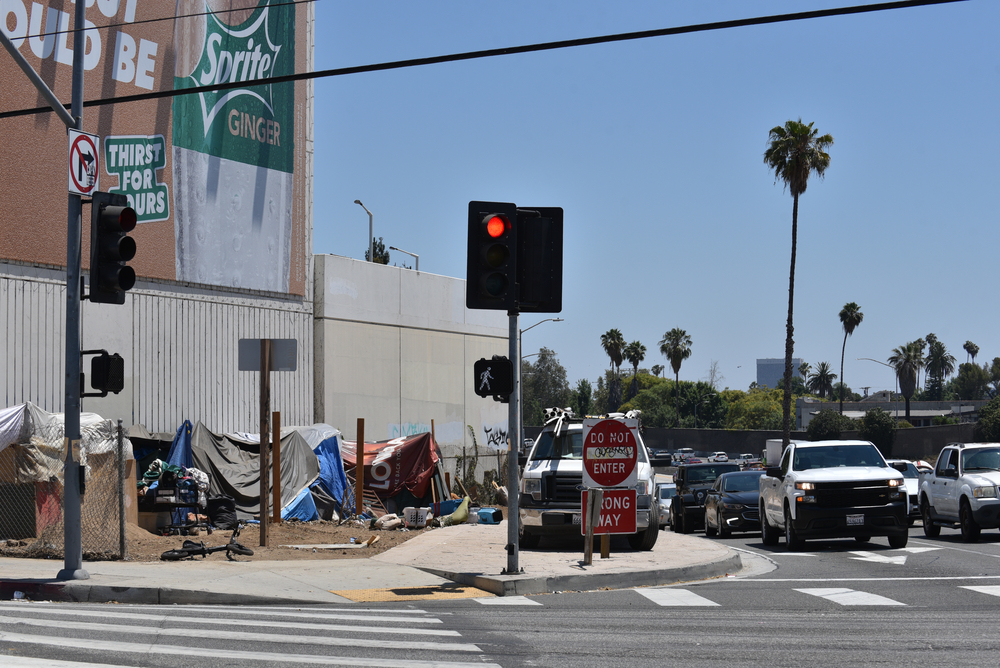
The Los Angeles City Council has voted to remove several anti-camping zones in Hollywood, raising new questions about how the City will balance its homelessness strategy with keeping sidewalks and public spaces safe and accessible.
On August 19, the Council voted 10-3 to approve a resolution from Councilmember Hugo Soto-Martinez removing 12 discretionary anti-camping zones in Council District 13, which includes Hollywood and surrounding neighborhoods.
The zones had been established under the City’s Municipal Code Section 41.18.
Section 41.18 restricts sitting, sleeping, lying or storing property in certain public areas.
The City has used the law to establish restrictions around locations such as schools, libraries, parks, underpasses and other sensitive areas.
The action in CD 13 appears to be the first time Los Angeles has rescinded discretionary 41.18 designations after they were established, according to NBC Los Angeles.
What You Need to Know
Soto-Martinez has argued that enforcement-based approaches can move people from one block to another without addressing the underlying causes of homelessness.
His office has instead emphasized interim housing, shelter and services. Soto-Martinez also pointed to City data indicating that people returned to 81% of encampments that had been subject to 41.18 enforcement. He said homelessness in CD 13 has declined by approximately 40% since he took office.
Other Councilmembers strongly disagreed with removing the restrictions.
Councilmembers Traci Park, Monica Rodriguez and Imelda Padilla voted against the resolution. Park argued that maintaining streets, sidewalks and other public spaces is a basic City responsibility and said she believes 41.18 restrictions should apply around sensitive locations.
Why it Matters
For BOMA/GLA members, the debate is about more than one City Council district.
Safe and accessible sidewalks and public spaces are essential to successful commercial districts.
Property owners and managers regularly deal with the impacts of homelessness near buildings, including blocked sidewalks and entrances, sanitation concerns, security incidents and challenges for tenants, employees and visitors.
Removing 41.18 zones does not automatically mean encampments will return to these locations.
However, the decision puts greater importance on the City demonstrating that its alternative approach can keep public spaces accessible while successfully connecting people experiencing homelessness with housing and services.
It could also establish a path for Councilmembers in other districts to reconsider existing 41.18 designations.
Stay Connected
BOMA/GLA supports compassionate and effective solutions to homelessness while also advocating for clean, safe and accessible commercial districts.
As Los Angeles changes how it approaches encampments, the City must ensure that property owners and managers are not left to manage the consequences on their own.
Outreach, shelter capacity, mental health and behavioral health resources, sanitation, public safety and clear coordination with property teams all need to be part of the solution.
BOMA/GLA will continue monitoring how the removal of these zones affects Hollywood and whether similar proposals emerge elsewhere in Los Angeles.
For commercial real estate, the measure of success will be straightforward: Are fewer people living on the streets, and are our sidewalks, businesses, and neighborhoods safer and more accessible?
Stay tuned to BOMA on the Frontline for updates on homelessness, public safety, and other policies affecting commercial real estate across Greater Los Angeles.